First Successful Recovered Space Mail of the China
By Lin Da’ An
On 3 July 1994 the Chinese 16th recoverable satellite was launch from Jiuquan Satellite Launch Centre (JSLC) BY LM-2D rocket. This type of rocket, mainly developed by the Shanghai Institute of Space Technology of China Aerospace Science and Technology Corporation, is a two-stage rocket with normal temperature propellant, which is mainly used to launch low-orbit payloads and was first successfully flown in August 1992. The Rocket length 41.056 m, diameter 3.35 m, take-off mass 251 t, take-off thrust 2962 kN. Satellite type: FSW-2, orbit: 178-388 km, inclined angle: 62.9, and one cycle time: 89.5 minutes. In addition to scientific exploration, the satellite was carried with technical test devices such as plants, animal microcells and industrial microgravity. The satellite returned to Anju Township, Suining city, Sichuan Province, at 11:35 AM on 18 July 1994.
Given china’s first failed recovery of space mail aboard the 15th recoverable satellite. This time the satellite carried total 2846 flown covers from four different departments.
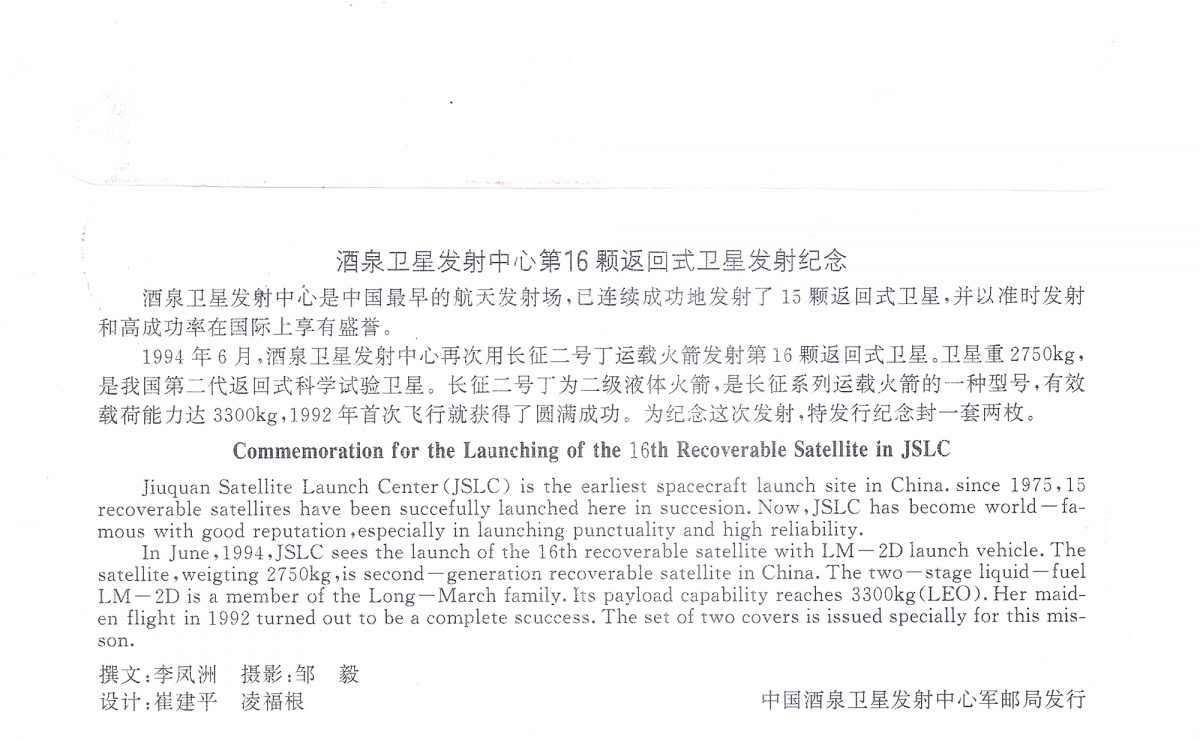
The flown cover (Fig. 1) issued by the military post office of the China Jiuquan Satellite Launch Centre. Only 108 flown covers were carried into the outer space (numbered from 940001 to 940108). This is also the first time China Jiuquan Satellite Launch Center military post office issued space mail. The front side of the cover was also cancelled with a special military postmark of “China Jiuquan Satellite Launch Centre, 1994. 5. 20, Lanzhou 27th Branch post office loaded in the cabin of spacecraft” (30mm in diameter), which was different with the previous postmark of “China Jiuquan Satellite Launch Centre M.P.O. Lanzhou city 27th Branch post Office” by the military authority at Oct. 8, 1993. In this new “flown proof” postmark, the Chinese character of “市” (means city) was removed and the words of “loaded in the cabin of spacecraft” were added on the two sides of the rectangular box, whose size was reduced from 7x19 mm to 6.5x18.5 mm.
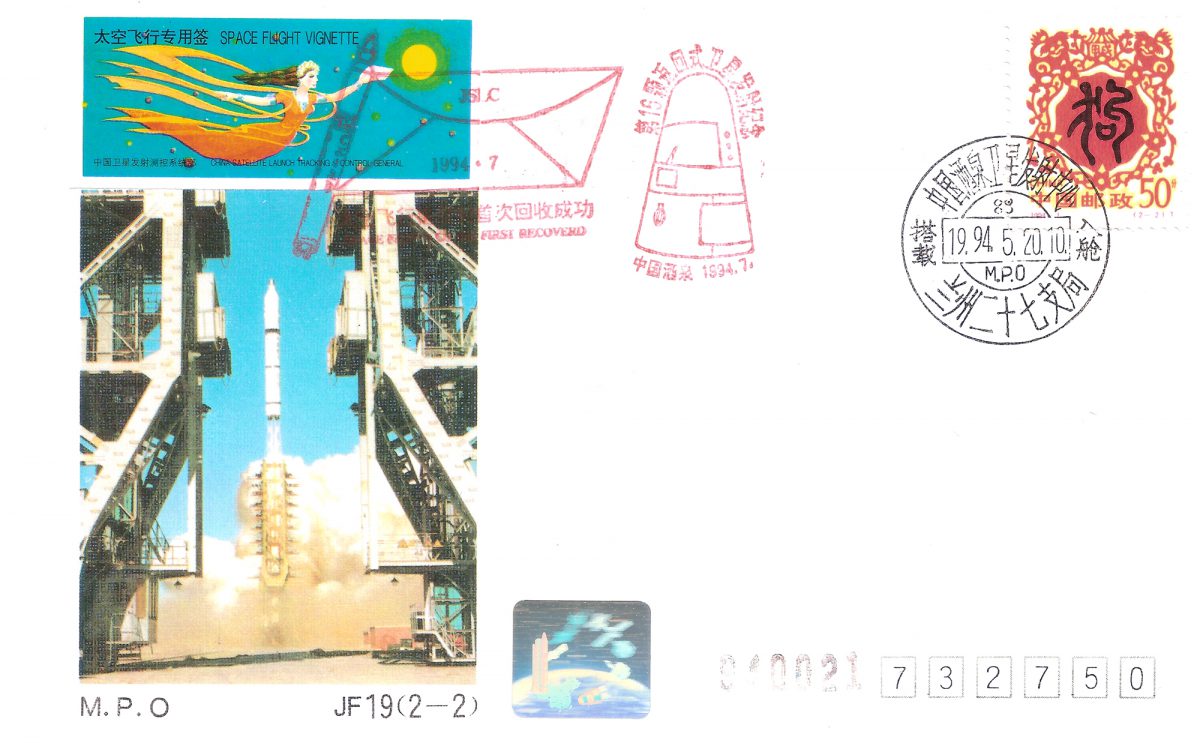
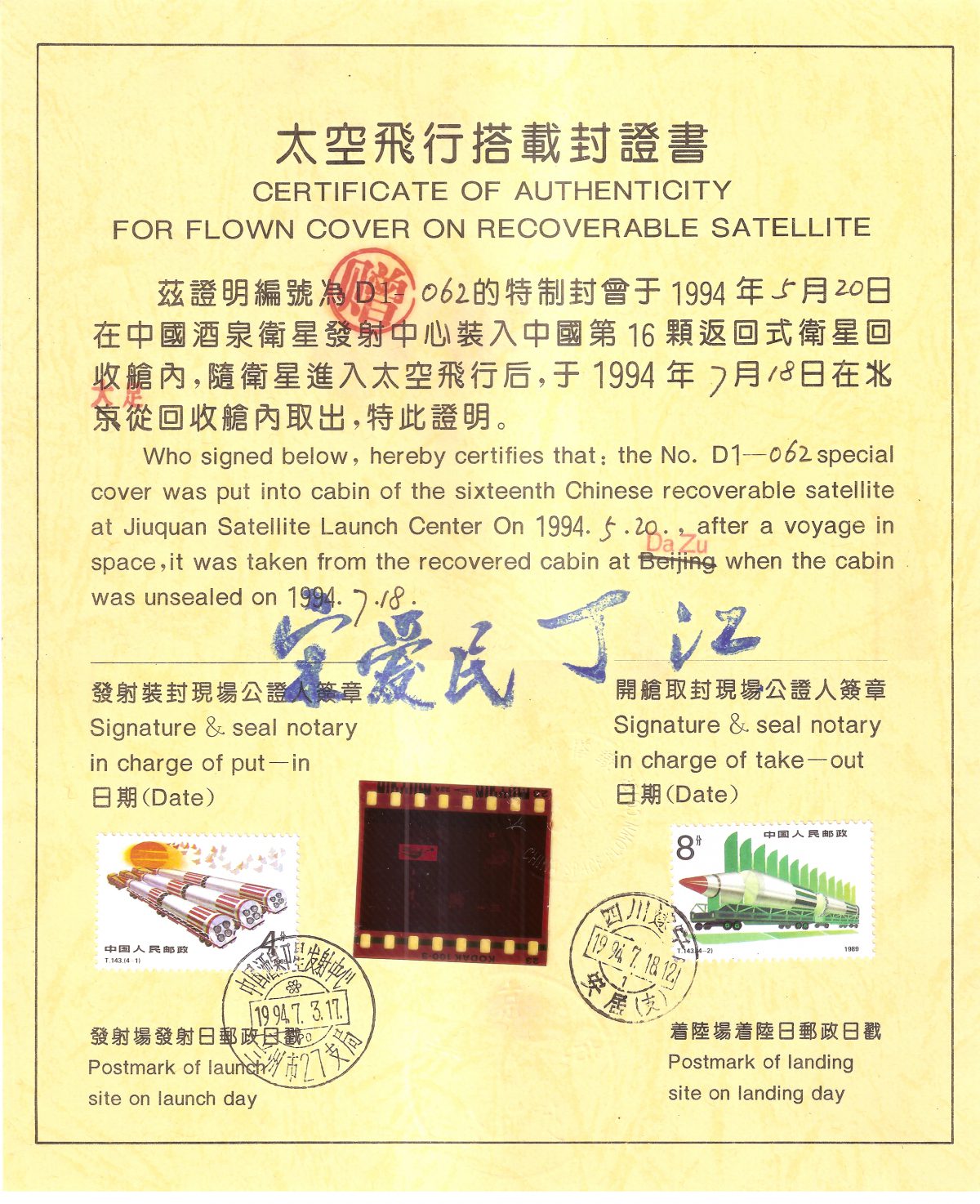
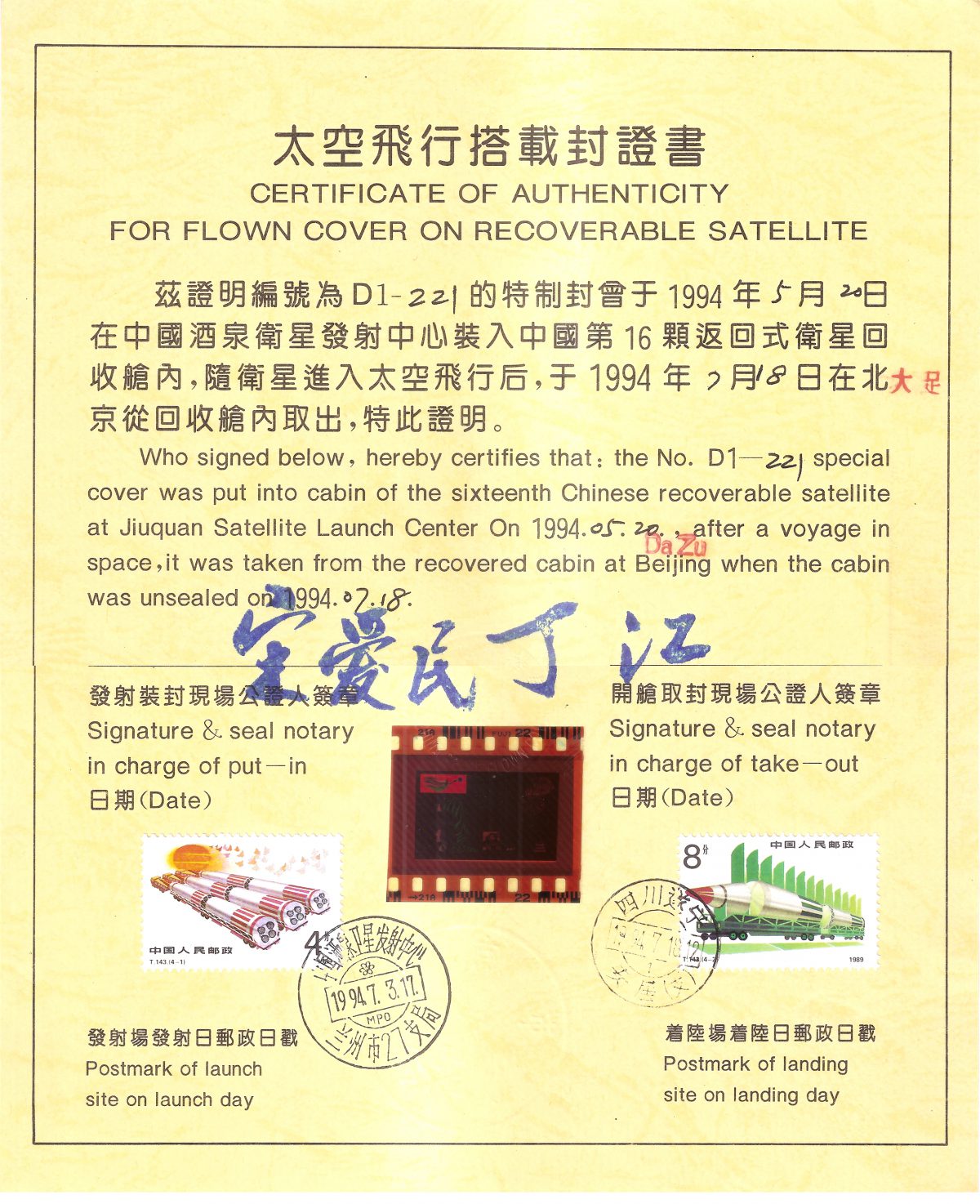
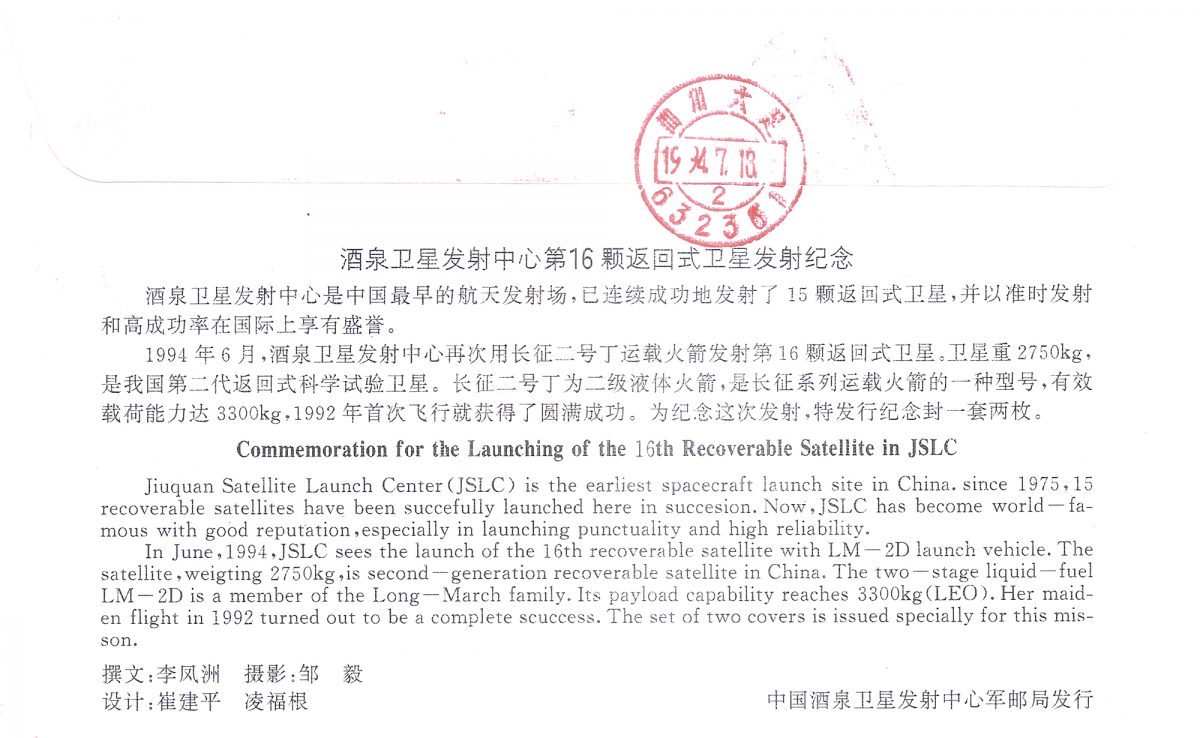
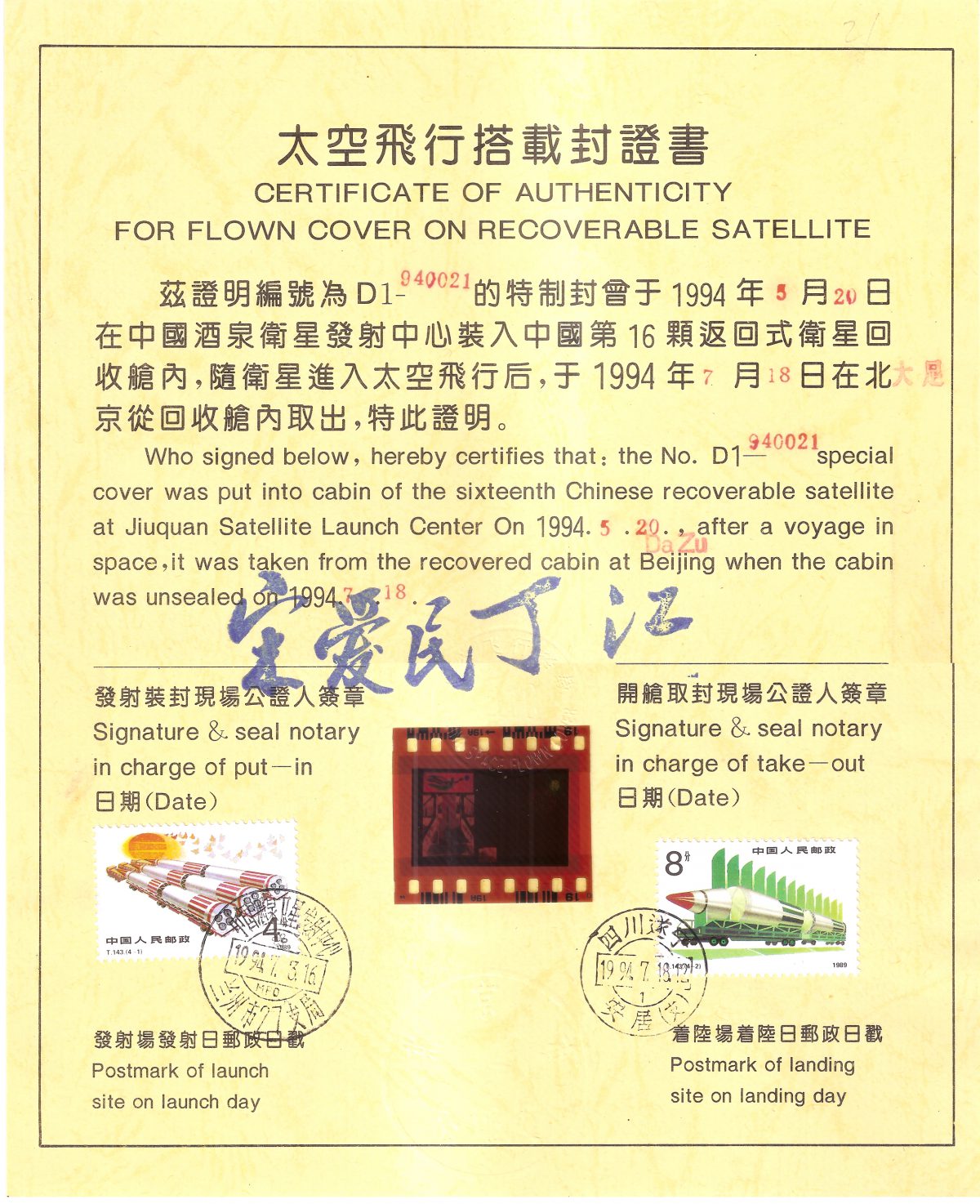
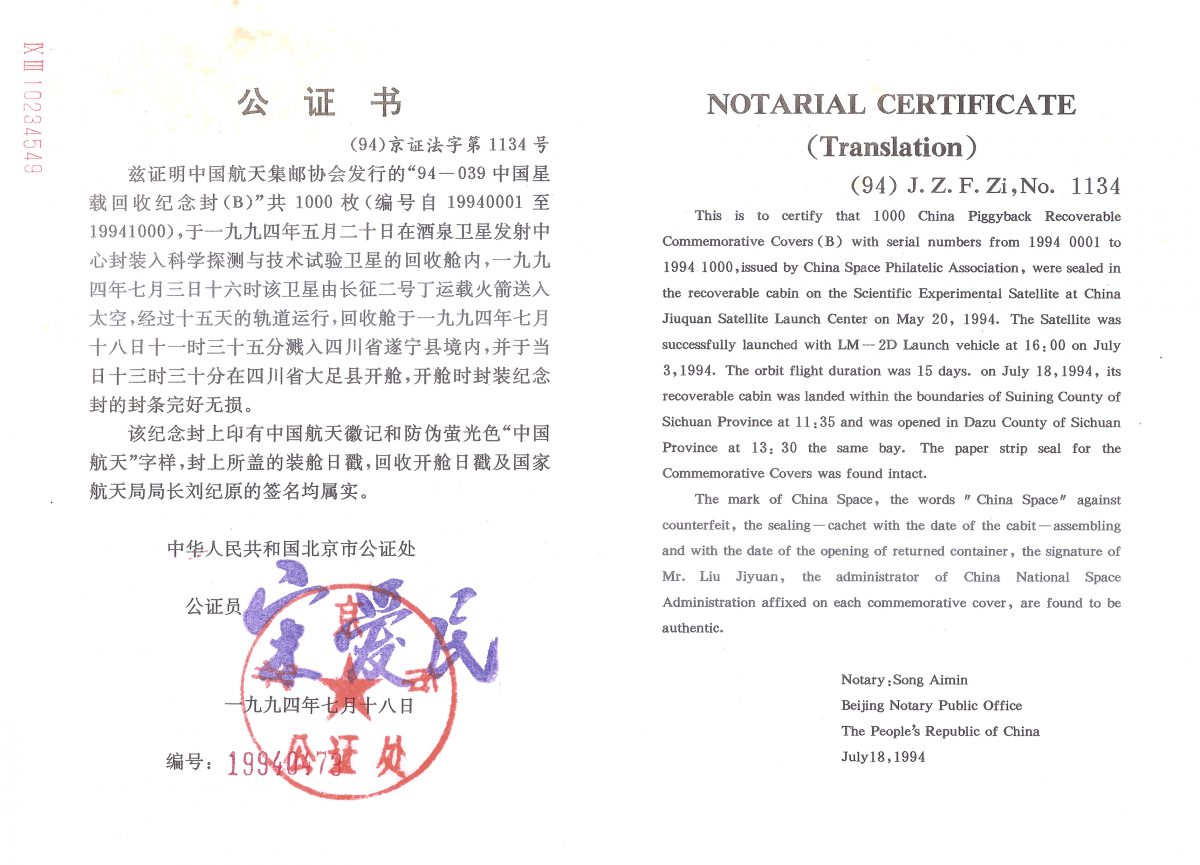
This cover was bearing with a “Space Flight Vignette” issued by the China Satellite Launch and Tracking Control General at first time, also tied with a “CLTC China Flown Cover” steel seal and a “JSLC Space Flown Cover First Recovered 1994.7” the red cachet. In addition, there is a satellite-like red cachet, the text of which is: the 16th recoverable satellite launch commemoration - July 1994, Jiuquan, China. On reverse side of the cover (Fig. 2) was tied with a red postmark of the capsule opening cabin date: “1994. 7. 18 Sichuan Dazu 632361”. The cover front was stamped with a genuine-guaranteed fluorescence label, and also tied with a steel seal of “Beijing Notary Public Office”. Each space flown cover has a number, corresponding to a certificate (Fig. 3) issued by the Beijing Notary Office. The certificate is stamped with the postmark of the launch day from the launch site: “China Jiuquan Satellite Launch Centre 1994. 7. 3. 17, M.P.O. Lanzhou city 27th Branch post Office”and the postmark of the landing site on landing day: “Sichuan Suining 1994. 7. 18. 12 Anju (Branch)”.
The flown cover of the 16th China recovered satellite gifted by the China Satellite Launch and Tracking General (CLTC). Only 200 flown covers cancelled with the red Chinese character of “赠” (means gift) existed (Fig. 4 and Fig. 5 reverse side of the cover).
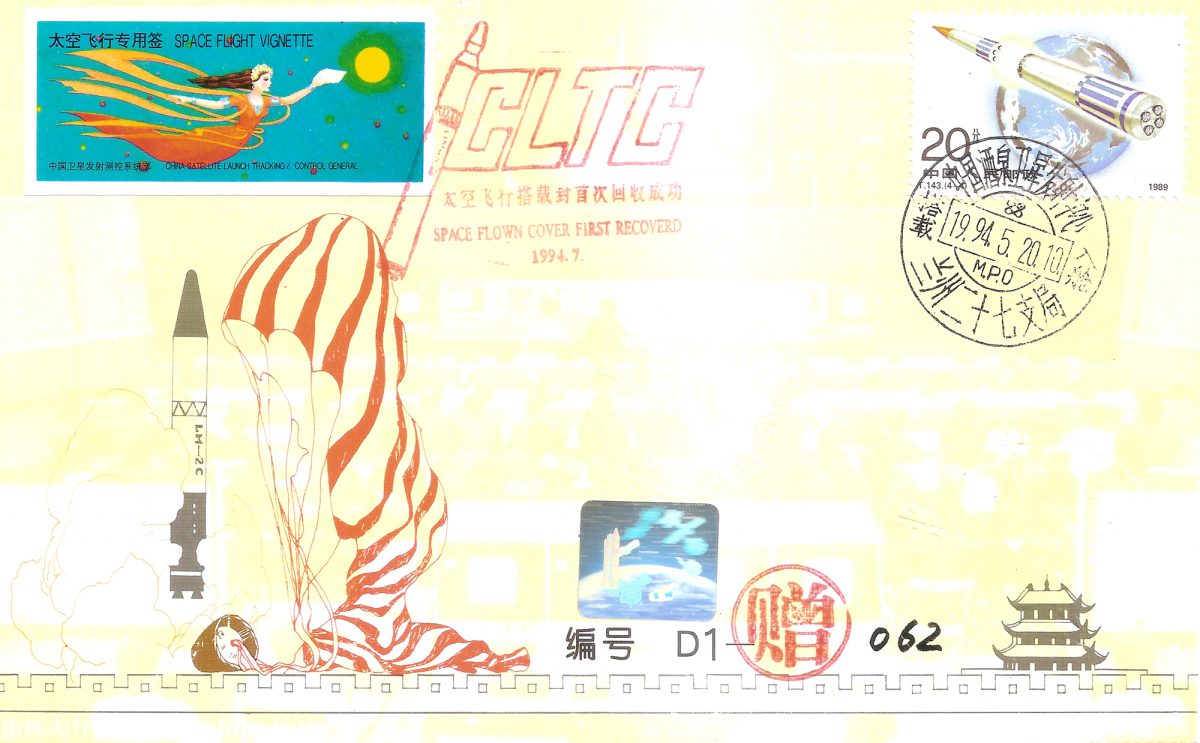
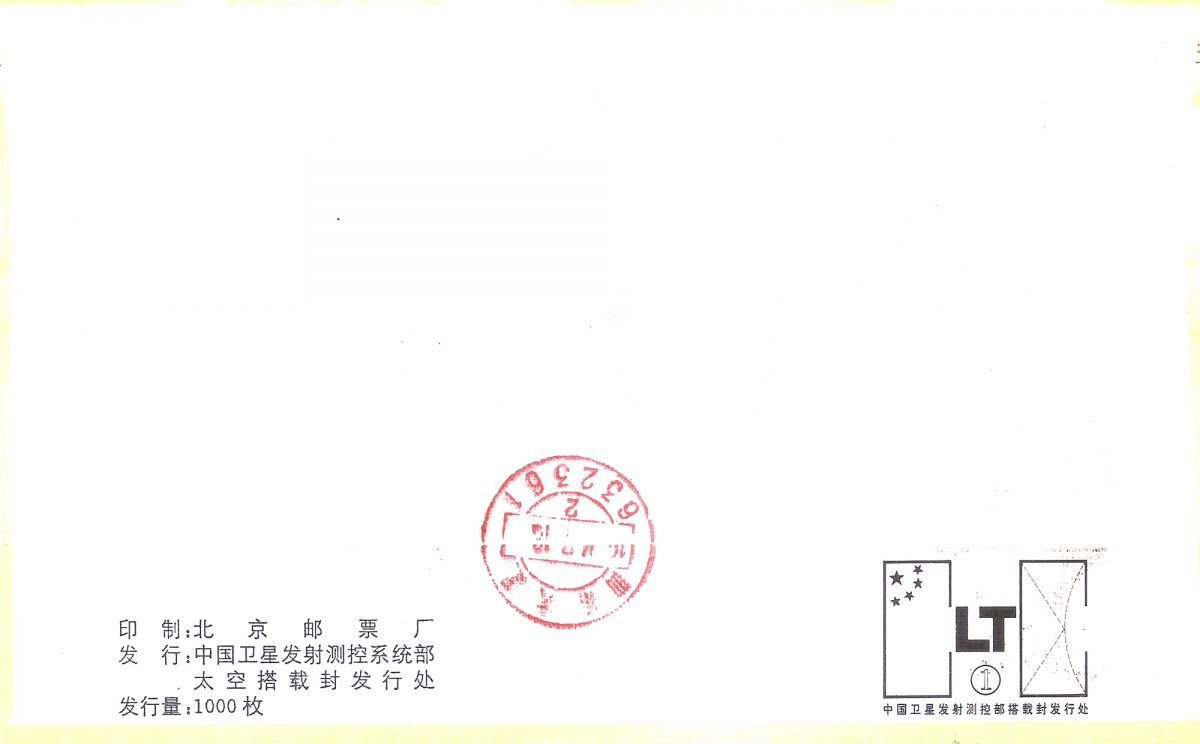
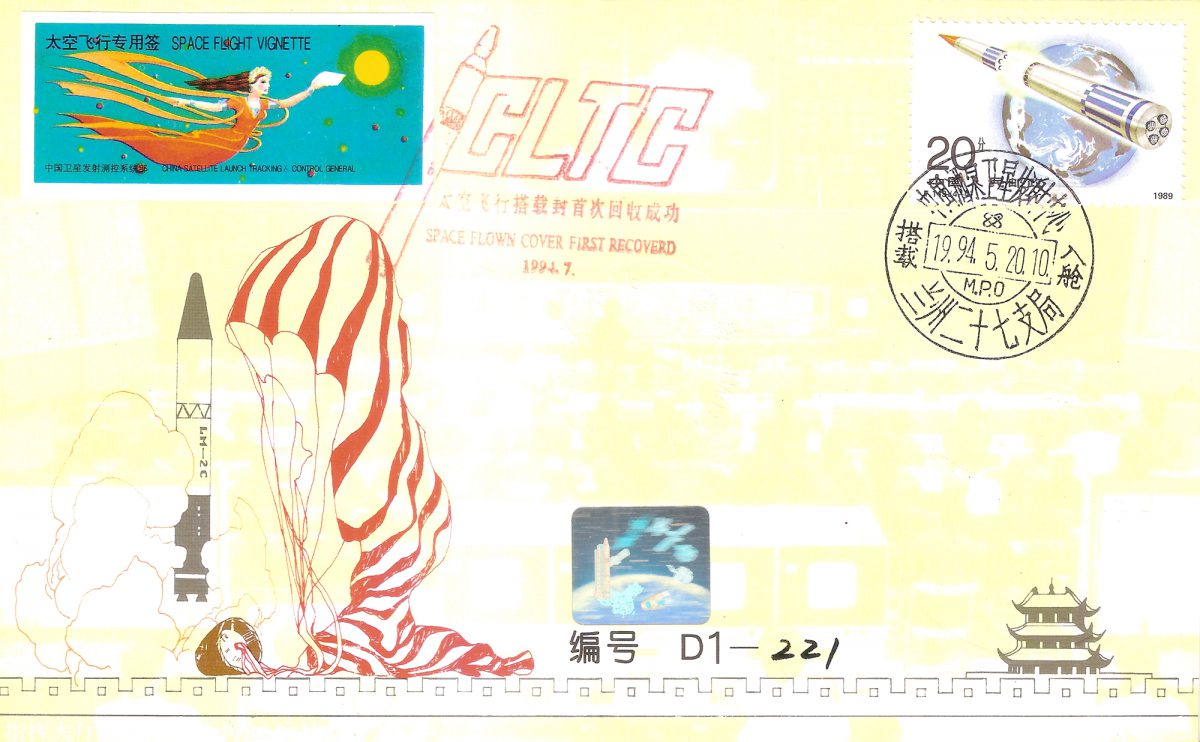
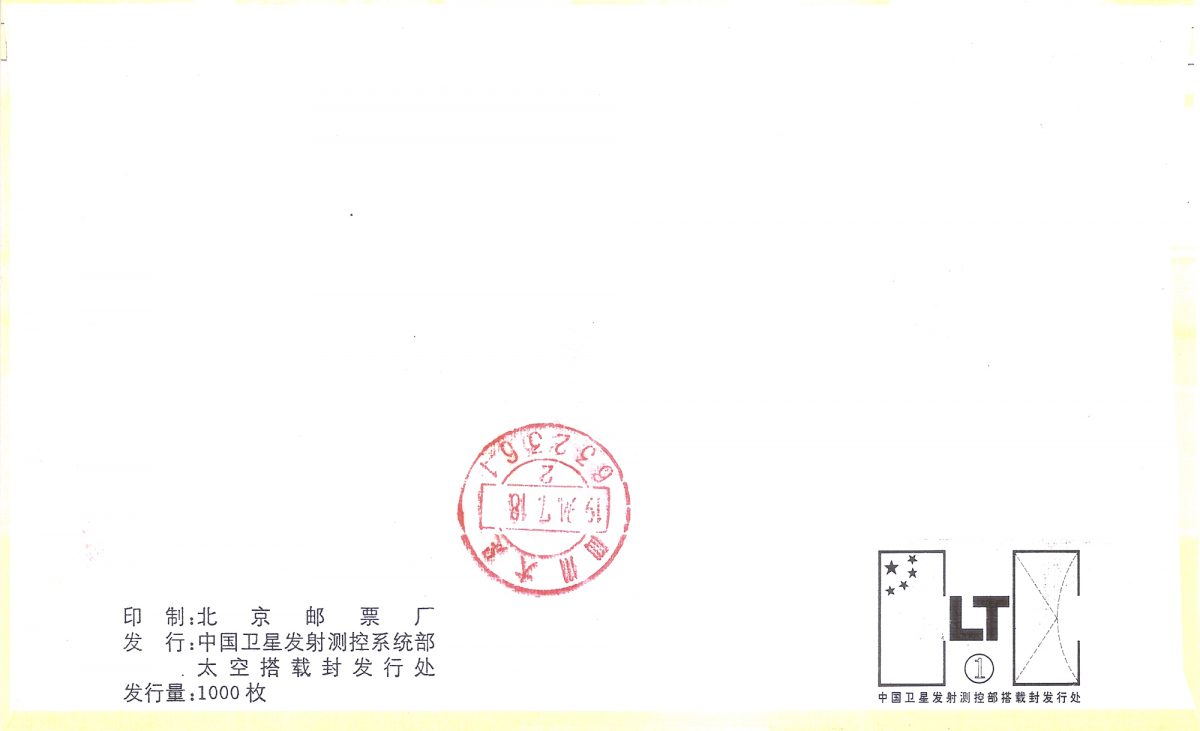
In addition to those 200 flown “gift” covers, 1000 flown covers (Fig. 6 and Fig. 7 reverse side of the cover) without the red Chinese character of “赠” for the purpose of commercial trading were issued by CLTC, too.
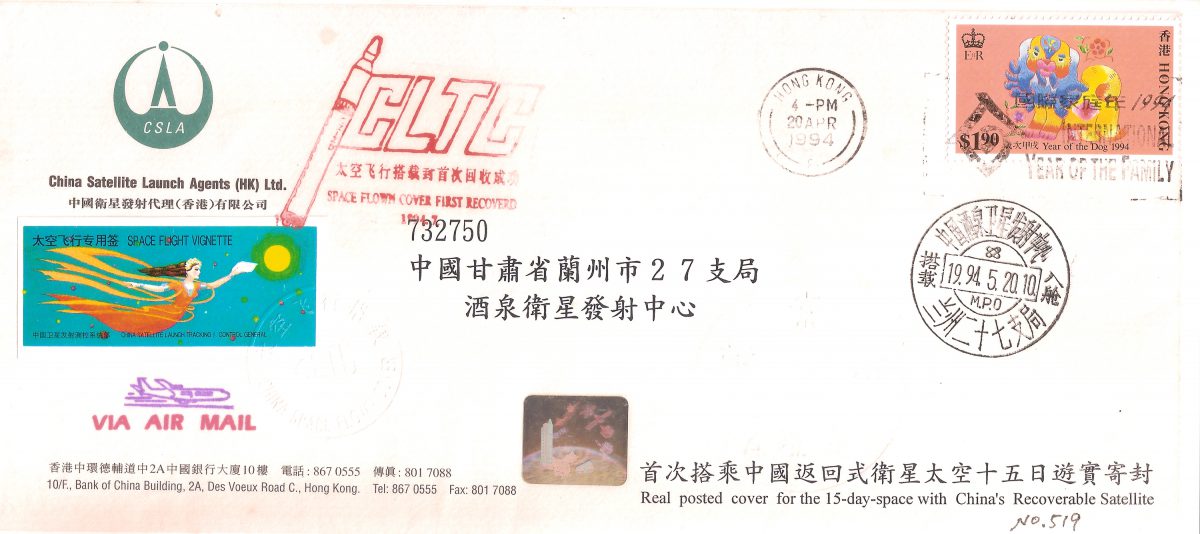
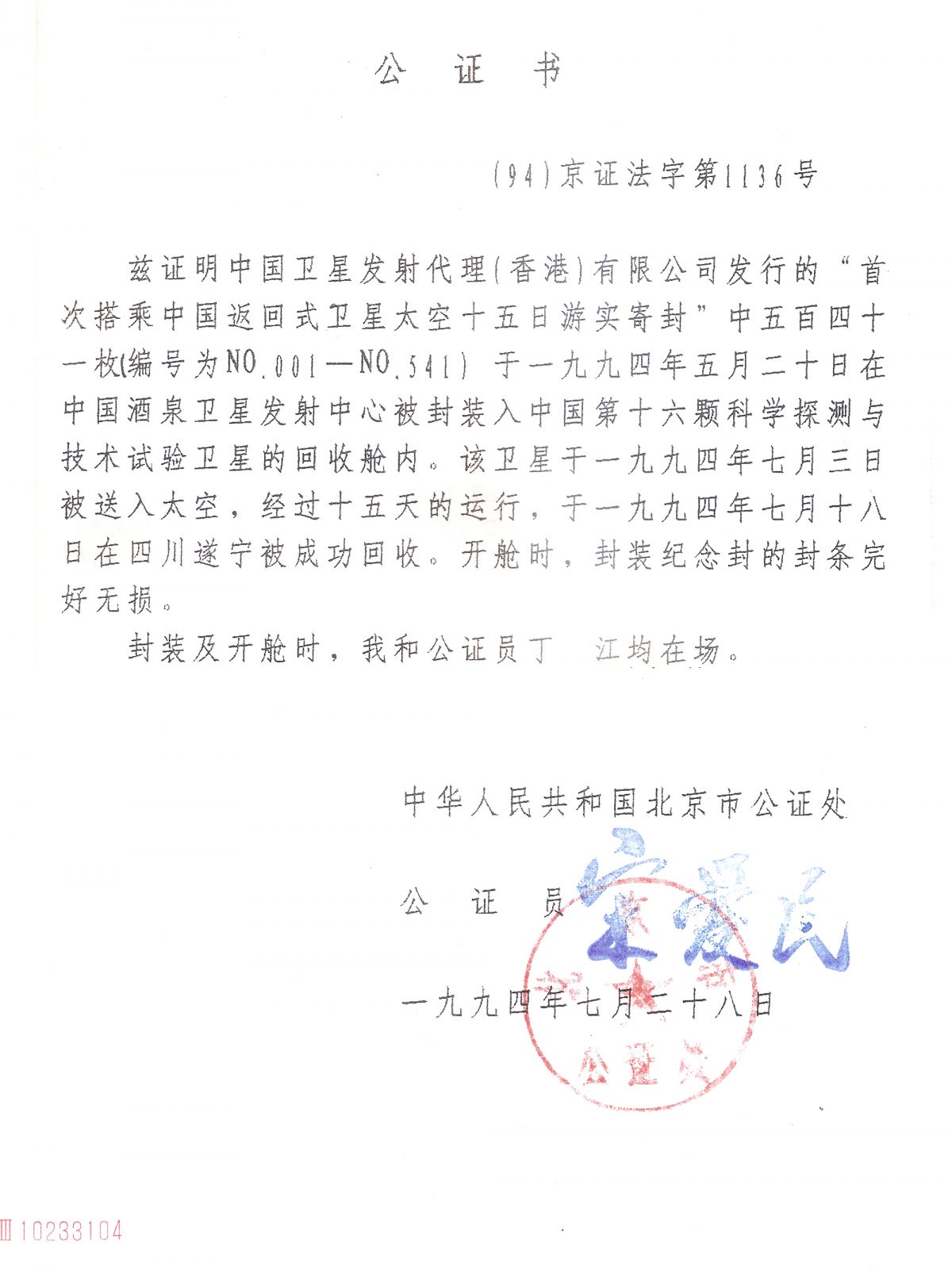
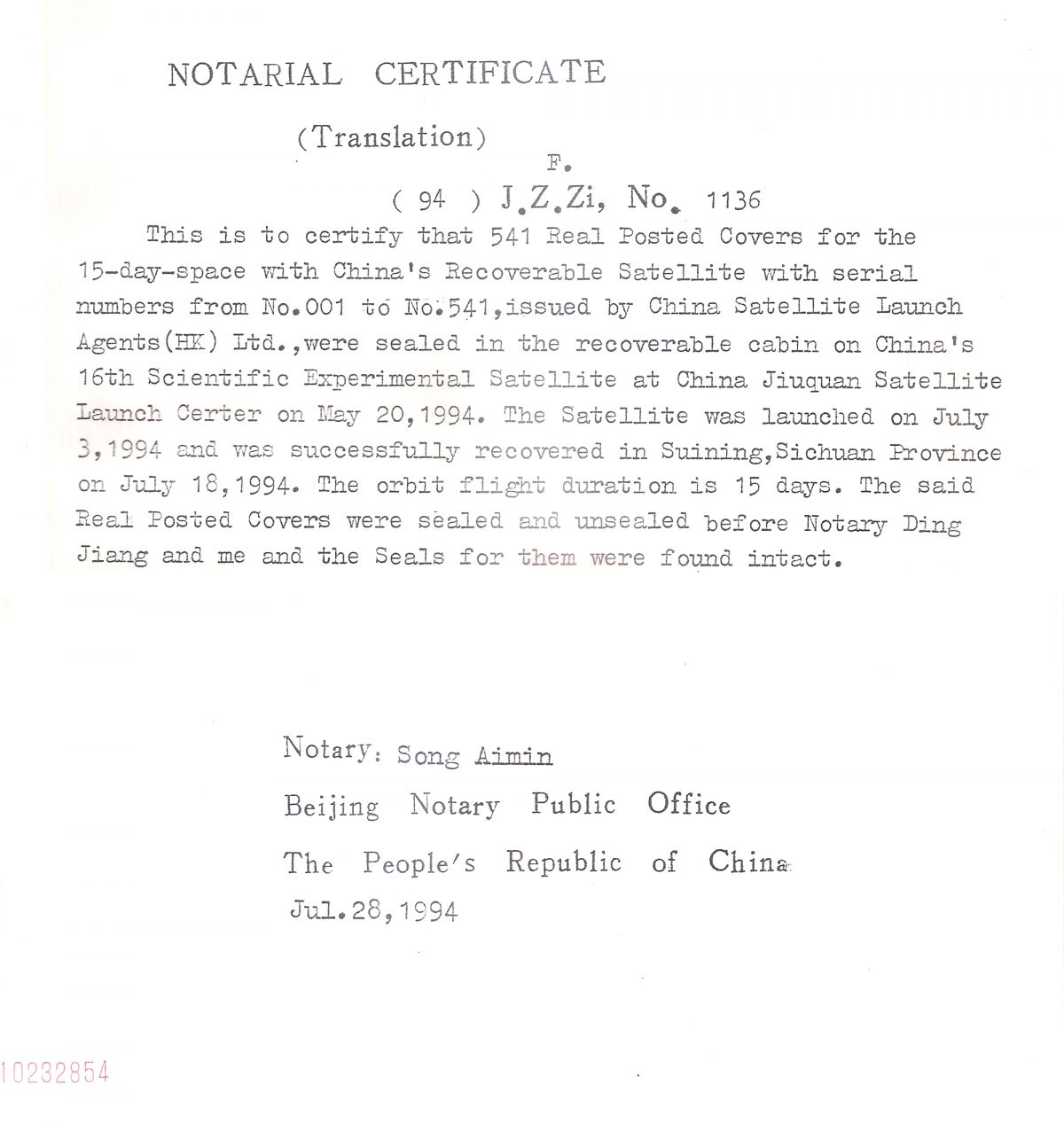
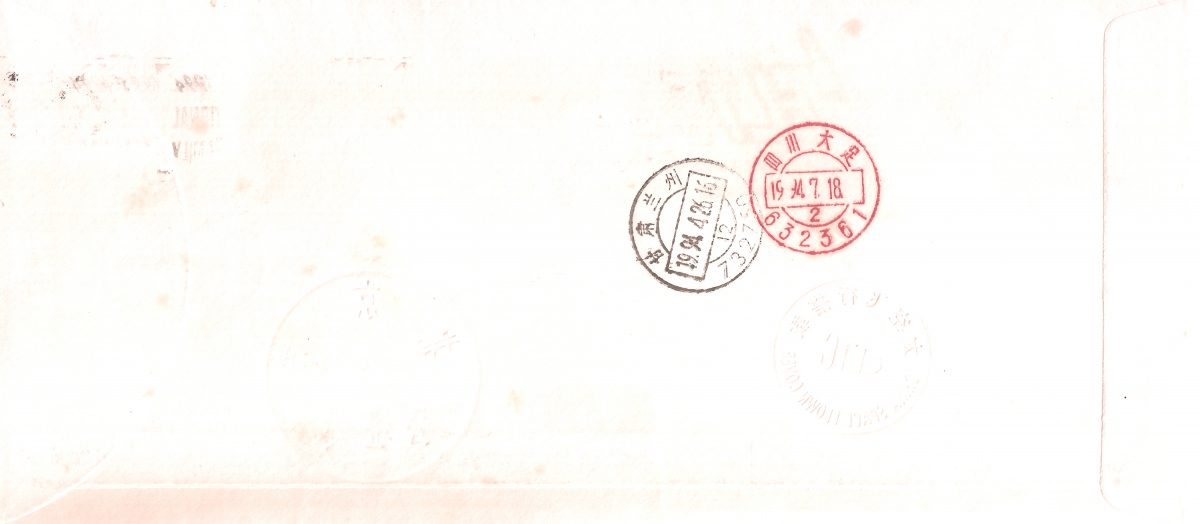
The flown cover (Fig. 8) of the 16th China recoverable satellite issued by the China satellite launch agent (Hong Kong) Ltd. (which belongs to the China Satellite Launch and Tracking Control General). China satellite launch agent (Hong Kong) Ltd. had made 1000 covers, which were mailed out from Hong Kong at 20 April 1994 and arrived at Jiuquan satellite launch centre on April 26, 1994. Unfortunately, because of the post damage, only 541 covers (Fig. 9 and Fig. 10 certificate) were loaded in the cabin finally. This cover is tied with a postmark of “Hong Kong 20 April 1994” and a special cachet of “International Year of the Family 1994”. The reverse side of the cover (Fig. 11) was tied with a red recovered postmark of “1994. 7. 18 Sichuan Dazu 632361”, also with a black postmark of “1994. 4. 26 Gansu Lanzhou 732750”.
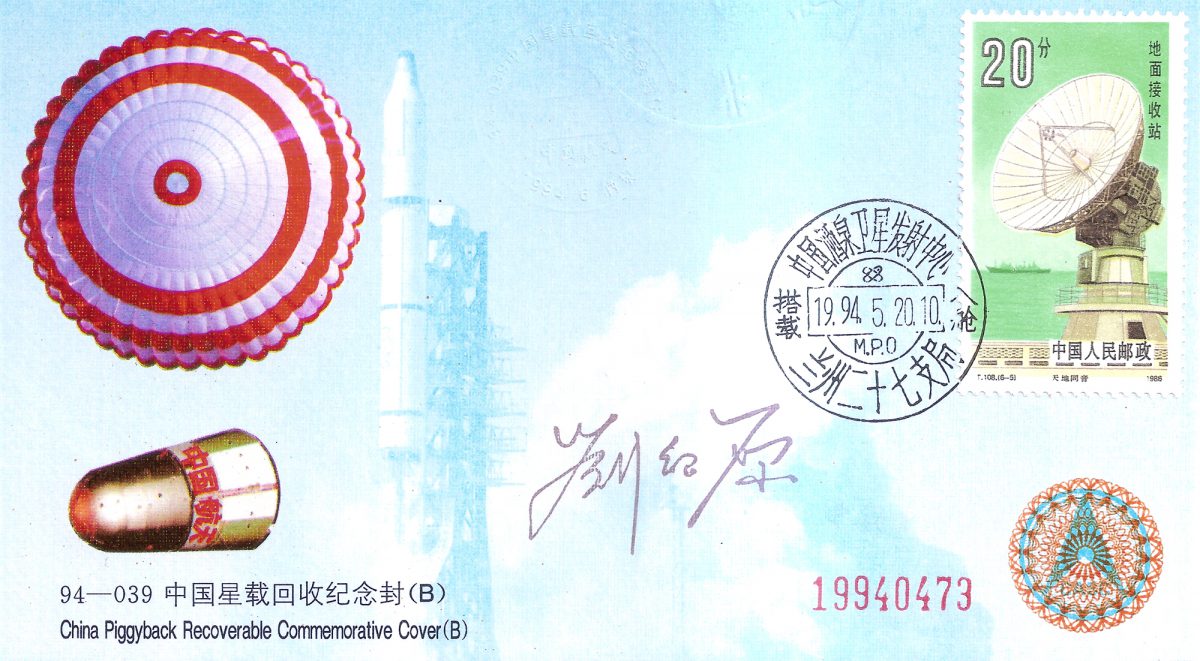
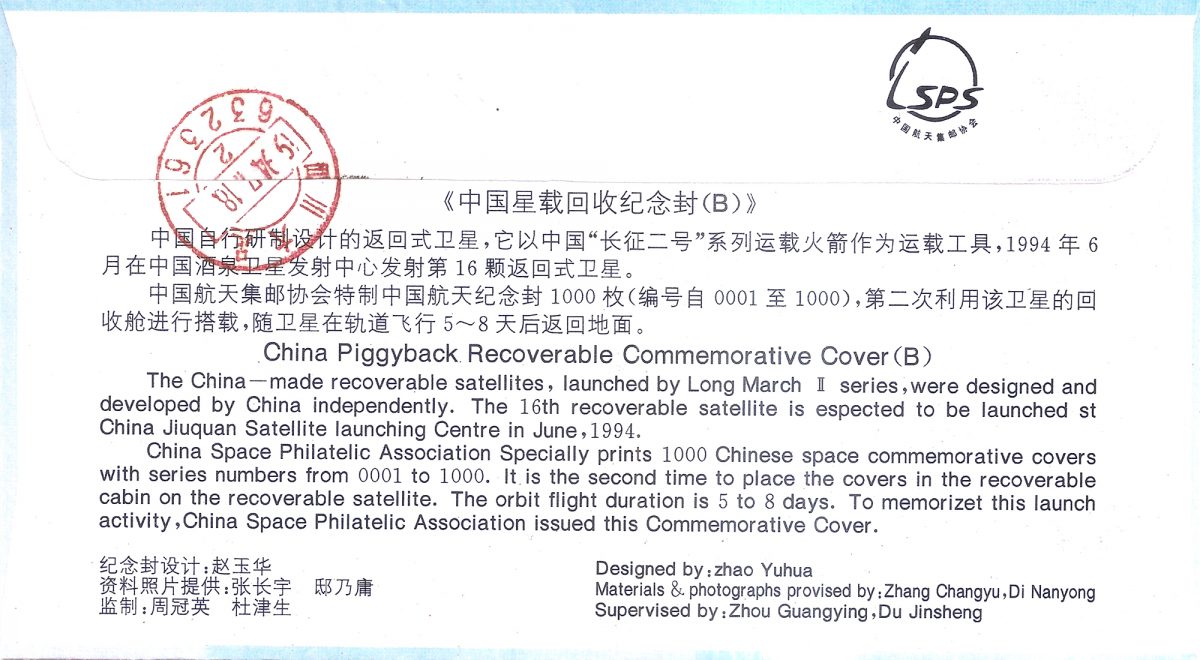
The flown cover (Fig. 12 and Fig. 13 reverse side of the cover) of the 16th China recovered satellite issued by the China Space Philatelic Association. The corporation had originally prepared 1000 covers for flying in the space, numbered from 19940001 to 19941000 and all were signed by Liu Jiyan (the general manager), but when loaded in the cabin, two covers of No. 19940155 and No. 19940551 were lost and the cover of No. 19940430 was found without cancelling that “flown-proof” postmark, therefore, only 997 flown covers were notarised. The cover front is tied with a steel seal of “94-039 China Satellite flown and Recoverable Cover (B) 1994. 5. Jiuquan” and a steel seal of “Beijing Notary Public Office (Fig. 14 certificate)”, also bearing with a fluorescence label of “genuine” guarantee at lower right corner.
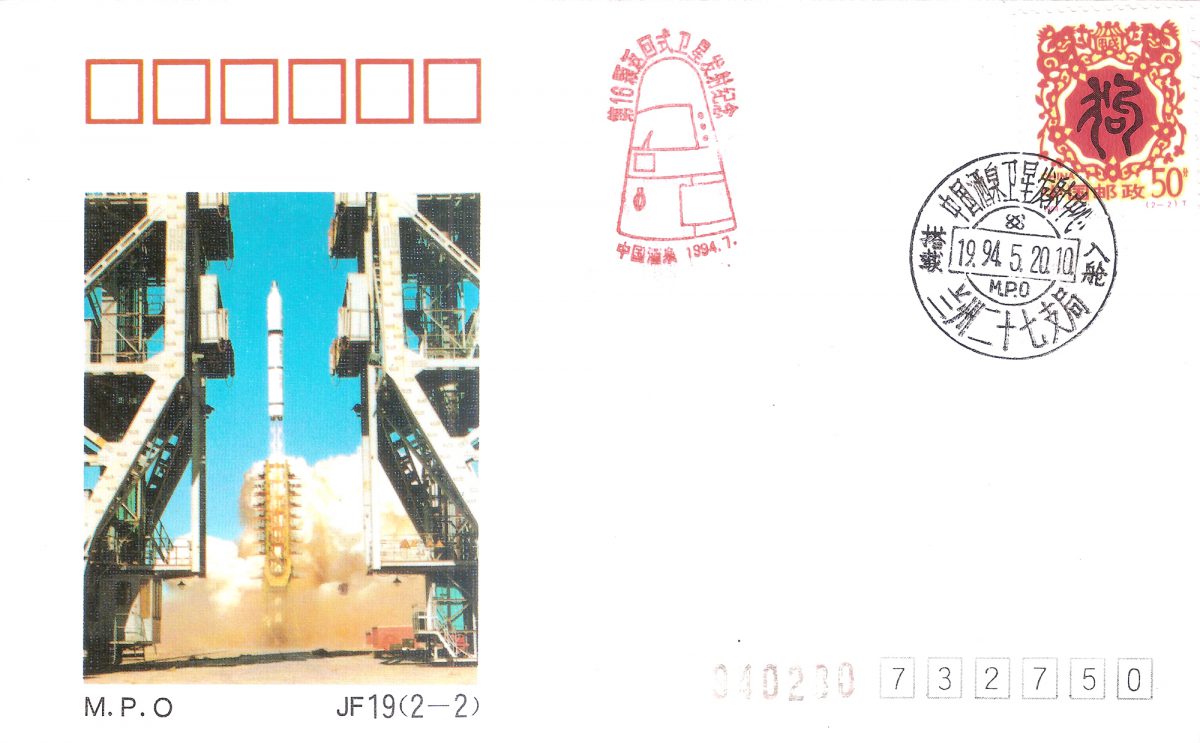
Non-flown cover Because of the loading weight limited by the satellite, some covers of the Jiuquan Satellite Launch Centre was not loaded in the capsule of the satellite. Although the covers is also stamped with the special military postmark of “China Jiuquan Satellite Launch Centre, 1994. 5. 20, Lanzhou 27th Branch post office loaded in the cabin of spacecraft”. The non-flown covers (Fig. 15) without any steel seal, also without affix any label.
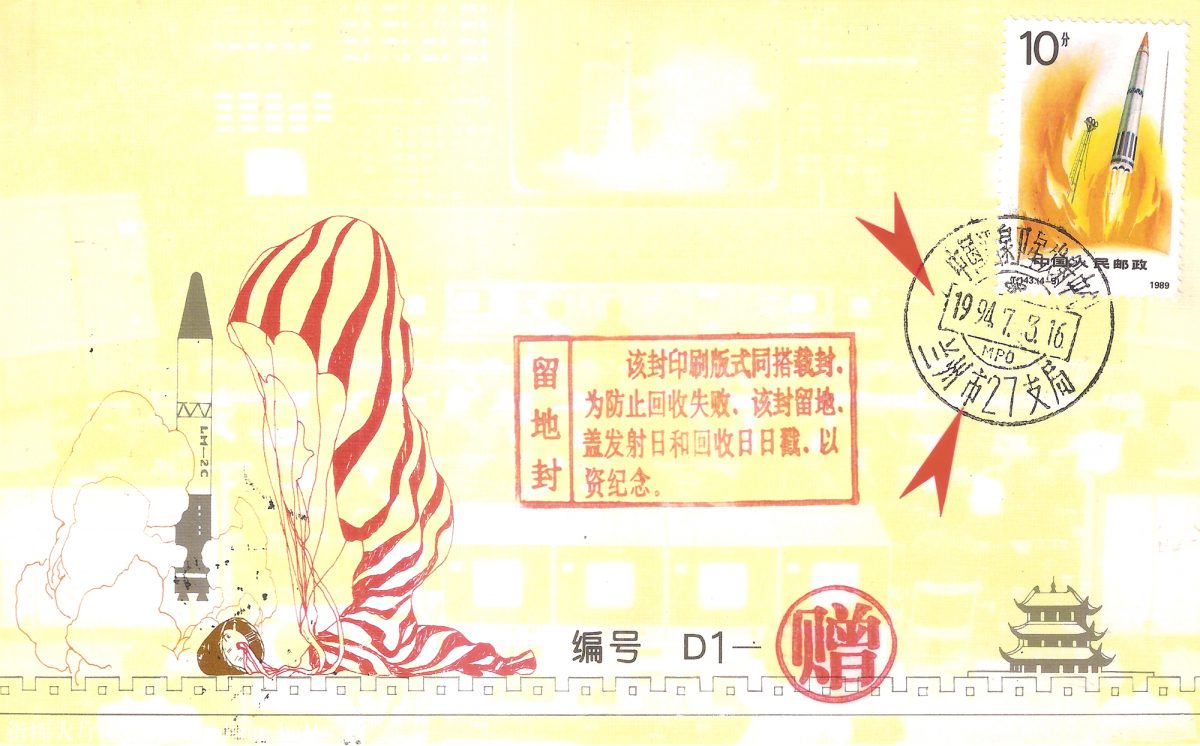
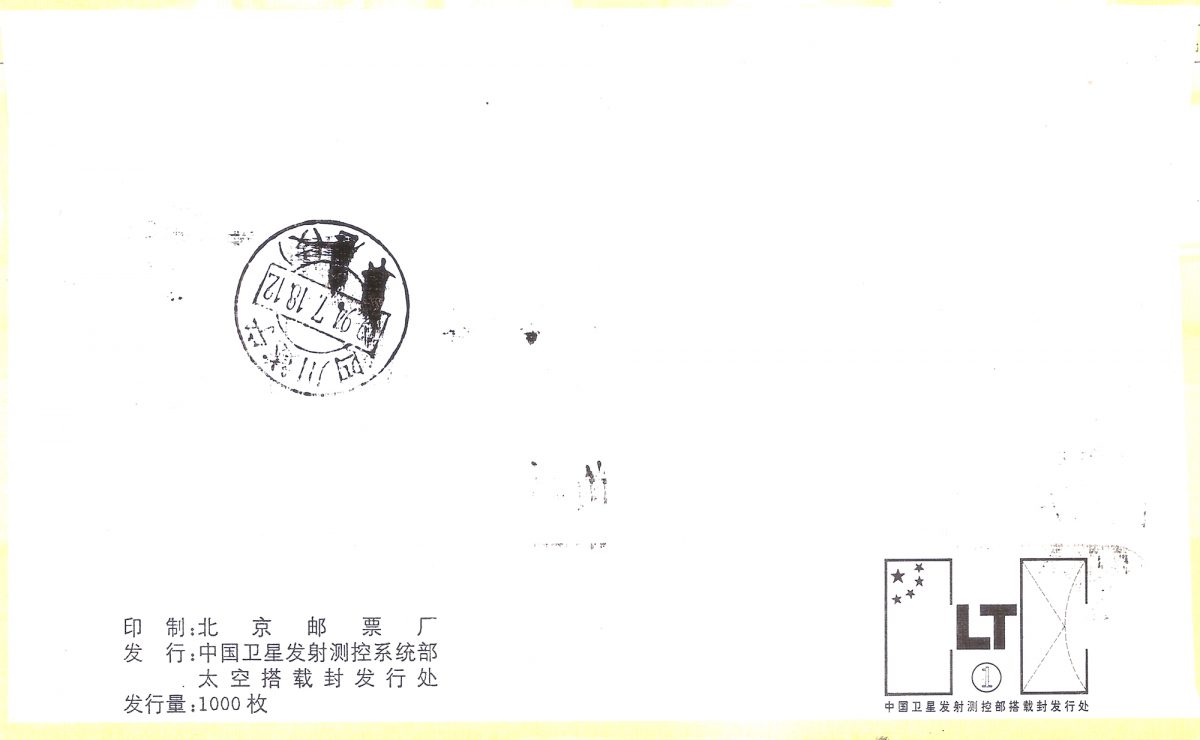
In order to avoid the failure of recovering those flown covers, CLTC had made another 1000+200 non-flown covers. The front side of this kind cover (Fig. 16) was tied with the launch day postmark of “China Jiuquan Satellite Launch Centre 1994. 7. 3 Lanzhou city 27th Branch Post office”, and the reverse side is tied with the recovered day postmark of “Sichuan Suining 1994. 7. 18 Anju (Fig. 17)”.